
With YouTube videos, HGTV home improvement shows, and other tutorials online, it’s easy to believe you can tackle a wide range of DIY projects. Many in California take pride in maintaining their own landscapes, making minor home repairs, and taking on fun art projects using skills they’ve learned from the internet. However, it’s easy to fall into the trap of believing you can do anything just from watching a video. The truth is that some things are best left to the professionals, including tree removal.
When it comes to trees, there are a number of challenges you may not be ready for. Trying to take down a tree yourself isn’t just difficult, it can be incredibly dangerous. That’s why it’s always best to call the experts at Alan Quality Tree Care.
Understanding California’s Unique Tree Challenges
California’s climate plays a large role in how stable our trees are. If there are long periods of drought followed by heavy winters, it’s very likely that your trees are dealing with unseen issues related to root integrity. During long dry periods, the roots can shrink or even die back, leaving less support. Even a tree that looks tall and strong may have very little in the way of anchor roots.
Some specific species are also at risk. For example, the native Valley Oak trees are currently dealing with Mediterranean Oak Borer infestations. These pests can eat away at a tree very quickly, leaving it practically dead within a few months.
Then there are the infamous California wildfires. Dead or dying trees are fire hazards. Using tools like a chainsaw can actually create sparks, starting the very fire you’re trying to prevent.
The Risks of DIY Tree Removal
The numbers related to DIY tree work are sobering. Around eight people die every month in the US due to DIY tree-related accidents.
Risks associated with DIY tree removal:
- Miscalculating the fall zone – It can be very difficult to tell where a tree is going to fall without the right training in how to cut and fell a tree.
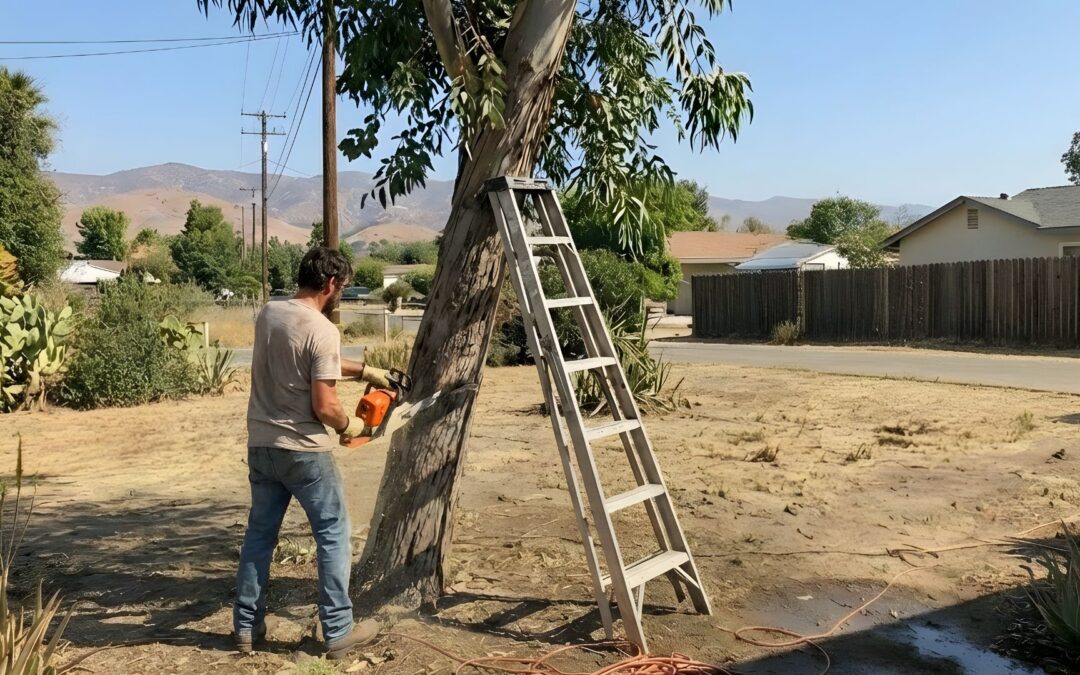
- Kickback from a chainsaw – If you don’t have the right safety gear, the kickback from a chainsaw can easily injure you.
- Property damage – Even if you do send the tree falling away from your home, it’s possible it will land on a fence, your neighbor’s property, or worse, live power lines. If you take down a power line, the cost to have it repaired can be very high, and your insurance will likely not apply.
Legal and Liability Concerns
When it comes to removing trees, you can’t simply walk outside, pick up a saw, and start cutting. In California, there are a number of regulations you have to follow, especially if your trees are protected. These protected trees, such as white oaks or heritage trees, can’t be removed without a permit. Otherwise, you may be fined.
When you work with a licensed tree removal expert, you don’t have to worry about understanding the regulations. We do, and we will make certain that we have the permits necessary to remove any trees that need to be taken out. It’s also important to have trees removed by a licensed professional; otherwise, any damage caused by those trees coming down will not be covered by your homeowners’ insurance.
When Emergency Tree Removal is Needed
It’s understandable that in an emergency, such as if a tree is about to fall, you want to act quickly. However, trying to handle emergency tree removal by yourself is often the most dangerous time to try to DIY. Trees that have been damaged by a storm are under tension. Cutting a branch that is under high tension can cause it to snap back, injuring you. We use special equipment and cranes to reduce the tension so the tree can be safely cut.
Choosing the Right Tree Removal Company
One thing to remember with tree removal is that cheap is often very expensive. Trying to save money and do it yourself often leaves you with massive repair bills and hospital bills. It’s always best to look for a reputable tree removal company with the following:
- Licensing – Verify that the company has a current license via the California Contractors State License Board.
- Insurance – Make certain that the company carries workers’ comp and liability insurance.
- Local knowledge – You want to work with a company that understands California’s regulations, specific pests, and soil conditions.
Remember, if a tree is over 12 feet tall, it’s not something you should DIY. Instead, you want to reach out to Alan Quality Tree Care. Let us put our years of local experience and knowledge of rigorous safety protocols to work for you. Reach out today to discuss your tree needs.