
Trees can be incredibly beautiful and add a ton of curb appeal to our homes, but they can also be a liability during storm season and wildfire season. While a tall tree looks majestic and provides a nice amount of shade during the summer, it can also destroy your home if it falls just right. That’s why tree risk assessment is so important. If a tree falls, it can cost thousands of dollars in repairs or, worse, it can kill someone. That’s why Alan Quality Tree Care is here to provide assessments and ensure your long-term safety and peace of mind.
Understanding Tree Risk Mitigation
Tree risk mitigation is all about identifying risks, prioritizing what needs to be done, and reducing the risk of a tree causing harm. In California, this is necessary due to our drought and rain cycles. Trees can become very brittle during droughts, and their roots become instable. This becomes even worse during storms when high winds hit trees now standing in rain-soaked soil. Our mitigation efforts, whether by pruning or removing trees, is designed to address any potential issues before they happen.
What Is an Advanced Tree Hazard Assessment?
A basic tree hazard assessment is a simple walk-through, but our advanced assessment is much more. A basic check can spot dead branches and other obvious issues, but an advanced assessment does much more:
- Checks the weight distribution and strength of a trunk for structural integrity.
- Looks at various environmental factors, including landscaping activity, soil grade and soil health.
- Determines risks related to the specific location, such as what the tree might hit if it were to fall.
The Role of a Certified Arborist
A professional, certified arborist does more than just remove branches or cut down trees. These experts have a high level of knowledge about trees, how to care for them, how to check their overall health, and how to remove them safely. Certified arborists have completed the comprehensive exam administered by the International Society of Arboriculture.
By hiring a professional with this certification, you’re ensuring that your trees are evaluated correctly. These experts understand how specific insects such as the Mediterranean Oak Borer can impact the local California ecosystem, too.
Arborist Tree Inspection Process
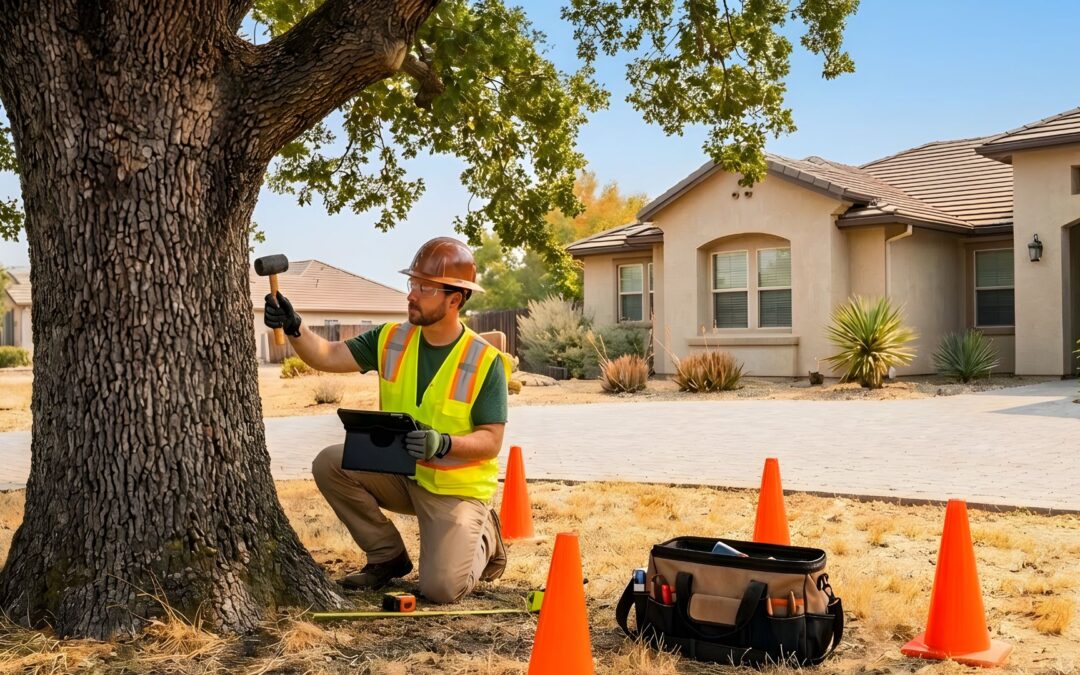
A professional arborist will provide a three-step inspection:
- First, we do a visual assessment that looks for red flags such as mushrooms growing on the roots (a sign of root rot) or disturbed dirt around the trunk (a sign of tilt).
- Next, per your request, we document our findings and rank your trees by their risk level. This lets you decide which trees need to be dealt with first.
Tree Risk Mitigation Strategies
After we’ve finished our inspection, we’ll provide you with our recommendations. These may include one or more of the following:
- Cabling – This technique uses flexible cables to support limbs without restricting the tree’s natural movement.
- Strategic pruning – Thinning out the canopy of the tree can help wind pass through it and reduce stress on the tree due to weight.
- Emergency removal – If a tree can no longer support itself, removal may be the only option.
- Soil improvement – When root rot is detected, it may be possible to still save the tree by improving the draining or changing the grade of the soil.
Choosing the Right Arborist in California
When looking for a professional arborist in California, you want to make certain to work with someone who is certified and has the appropriate insurance. Since our climate and weather are fairly specific, working with someone with years of local experience is also important.
Advanced tree care is really about being proactive. By working with Alan Quality Tree Care, you can make certain your trees are healthy and your home is protected. Don’t wait for the next storm – reach out today to schedule a tree assessment today.